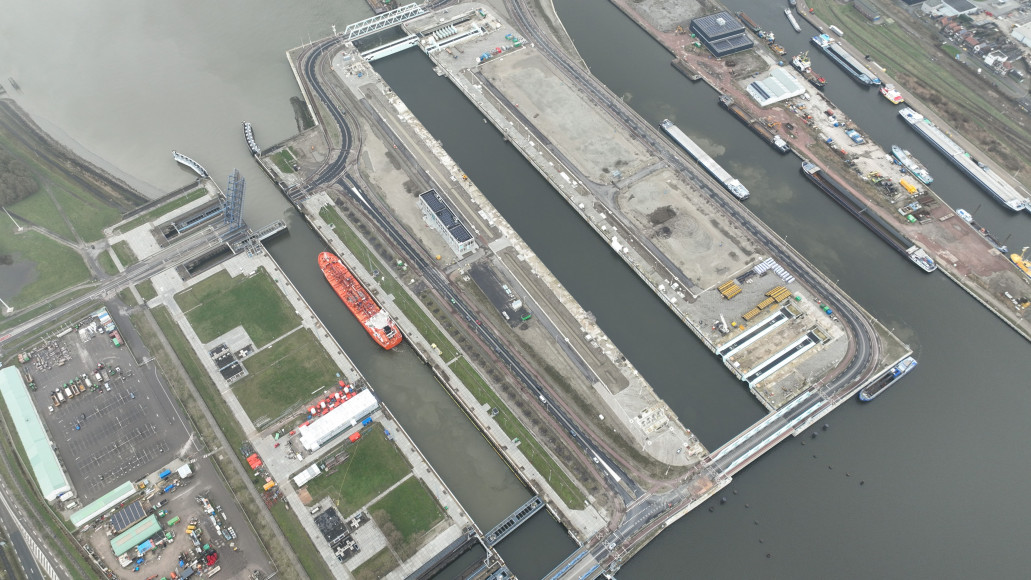
Water in the Ghent–Terneuzen Canal is becoming increasingly saline due to prolonged periods of drought and the operation of the new sea lock in Terneuzen. This poses challenges for industry, ecology, and water managers alike. Through the Schelde-in-Beeld consortium, Antea Group contributed to analyses, stakeholder workshops, and the development of a package of measures aimed at reducing the impact of these drought-related challenges. In doing so, we are helping to build a balanced and future-proof approach.

Rising salinity puts pressure on the canal area

The combination of prolonged drought and the commissioning of the new sea lock has led to a noticeable shift in the water composition of the Ghent–Terneuzen Canal. With less freshwater flowing in from upstream and more saltwater entering from the Western Scheldt, salinity levels have increased significantly in recent years.

For companies operating in the canal zone, this creates tangible operational challenges, including accelerated corrosion and increased wear and tear on pipelines, industrial installations, and port infrastructure. The ecological value of the connected Moervaart waterway and surrounding areas is also coming under growing pressure.

An integrated approach within the Schelde-in-Beeld consortium

Together with HKV Line in Water, Waardenburg Ecology, and Ghent University, Antea Group worked within the Schelde-in-Beeld consortium and in close collaboration with the Werkgroep Droogte (VNSC) to develop a well-founded and broadly supported strategy. Our contribution focused on four key areas:

  • Analysis of various drought scenarios and their impact on water levels and salinity
  • Development of measure packages, combining rapidly deployable operational actions with longer-term technical solutions
  • Stakeholder workshops bringing together water managers, businesses, environmental organizations, and government authorities to share needs and insights
  • Future outlooks to improve the region’s resilience to a drier climate and increasing salinity

The central recommendation is clear: combine immediate operational measures with structural technical interventions. This integrated approach takes into account the interests of all stakeholders and provides a realistic foundation for more sustainable water management in the canal area, both today and in the long term.