Climate modeling tailored to your project
Logo Antea Group - No text - Angled - Transparent

Climate modeling tailored to your project

Questions? Let's get in touch.

Siebe Puynen
Send an email
Marten Dugernier
Send an email

Making informed decisions on heat, wind, and quality of life

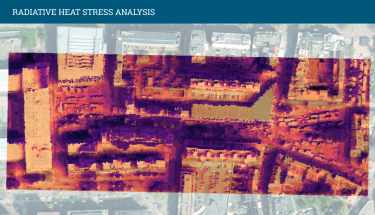
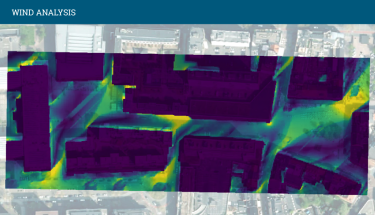
European, national, and regional policies increasingly push for climate action. At the same time, the demand for project‑specific, detailed insights is growing: How strongly is the local environment already experiencing the effects of climate change? How will this evolve? And what can we do about it? With our climate modeling, we provide clear, actionable answers. We map spatial differences in heat and wind, highlight risks (heat stress, wind hazards), and reveal opportunities to make designs climate‑adaptive and resilient.
Making informed decisions on heat, wind, and quality of life

How it works

Our approach is tailored to your project and follows clear steps:

  1. Data collection
    We combine geospatial data (topography, buildings, vegetation, soil) with project-specific information to create a detailed model of the study area.
  2. Simulation of extreme weather
    We apply meteorological data to analyze how heat and wind spread and vary within the project area. We often focus on specific extreme scenarios, such as a heatwave day (current and future climate) or a storm day (current and future climate).
  3. Risk and opportunity analysisWe identify areas within the project that are most vulnerable to heat stress or wind hazards. At the same time, we explore opportunities to make the project climate-adaptive and resilient under changing conditions.
  4. Module selection based on level of detail
    Together, we determine which module or combination best addresses your climate questions.

Application areas

Climate modeling adds value at every stage, from policy to design and implementation

  1. Environmental Impact Assessments (EIA): Clear insight into expected impacts and mitigation measures related to heat stress and UHI, livability, health, and air quality.
  2. Spatial policy plans: Evidence-based support for densification and open-space policies toward a climate-resilient environment.
  3. Zoning plans and other spatial plans: Wind modeling for impact assessments of new buildings/functions (e.g., high-rise). Heat stress analysis to substantiate or challenge intended uses.
  4. Master plans & development plans (designers/developers): Evaluate each design for microclimate impact and optimize accordingly. Ideal for scenario studies and decision-making.
  5. Permitting & communication: Clear maps and a strong narrative for discussions with authorities, stakeholders, and the public.

Modules for every level of detail

Modules can be used individually or combined—choose what fits your question and detail needs

  • Heat analysis: Up to 1×1 m resolution; focuses on temperature differences and heat stress. Standalone (radiant temperature) or combined with wind (perceived temperature).
  • Wind analysis: Up to 1×1 m resolution; for wind safety and comfort.
  • Comprehensive 3D microclimate modeling: In addition to heat and wind, insights into:
    • Humidity and air quality
    • Vegetation viability and tree species
    • Soil moisture and green roofs

Have questions about infiltration, drought, water storage, or flooding?

Interested in an exploratory conversation?
Contact us!

* Required field


Curious about how we handle your data? You can read about this in the privacy and cookie policy

Want to know more about climate modeling?

We are happy to help!

Siebe Puynen
Send an email
Marten Dugernier
Send an email