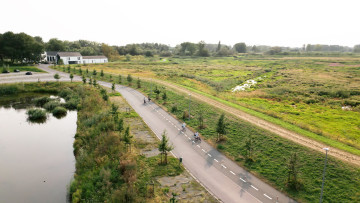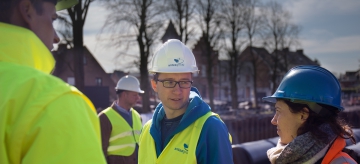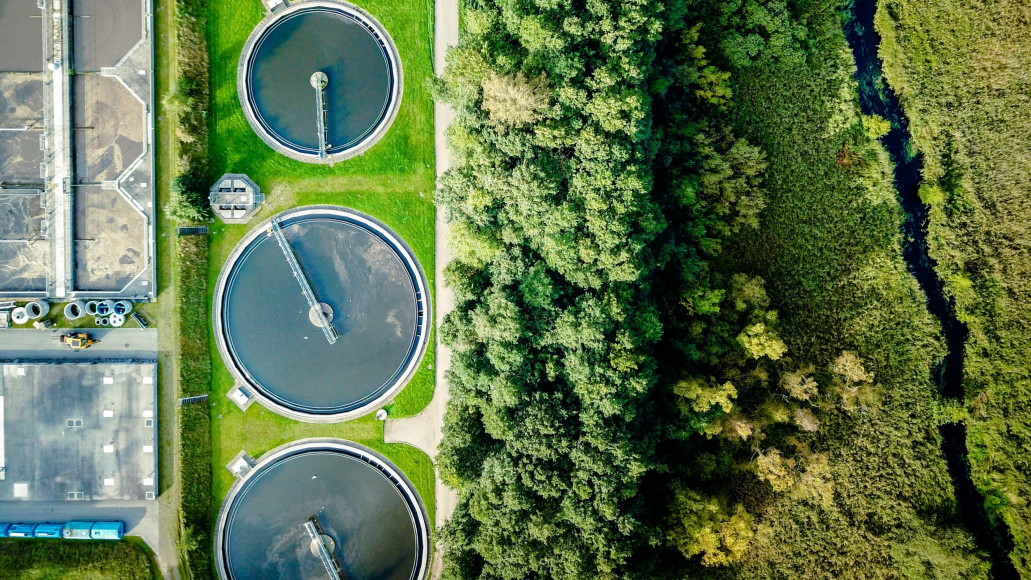
What if you didn't have to pick a side? Dries Wouters doesn't, he does both at Antea Group. Since 2025, he's been active across two business units simultaneously: Infrastructure and Environment. Two disciplines that might seem worlds apart, but in his hands flow seamlessly into each other. How does it feel, how does it work, and why wouldn't he have it any other way? Dries tells all in this interview.

Meet Dries

Bio-engineer, bridge-builder between two worlds, and someone who only truly feels at home when he can think broadly. Dries Wouters joined Antea Group in 2025 and quickly landed in a role few others share: split fifty-fifty between Infrastructure and Environment.

On one side, he dives into the world of wastewater treatment. On the other, he immerses himself in PFAS cases and groundwater remediation. Not a straitjacket, but a playing field. And it suits him perfectly!
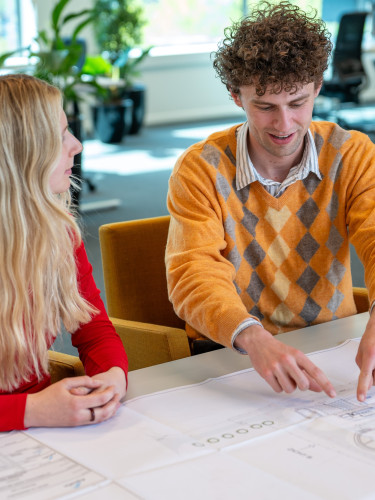
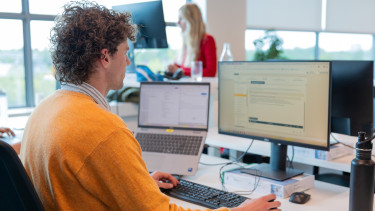
You work on projects in both Infrastructure and Environment at the same time. What does a typical workweek look like for you?

Although my role is officially split 50/50, in practice it fluctuates. It depends on what's on the table, and it does require some coordination. I try to structure my tasks well and regularly check in with project managers. If things get busier on one side, I can flag that, and colleagues on the other side will take it into account.

Why do you see it as an added value not to be tied to a single discipline or team?

I'm constantly in a situation where I'm learning as much as possible. You always have one foot in something familiar and the other in something completely new. That lets you switch gears quickly, but it also keeps you challenged.

At first, Infrastructure and Environment felt like two completely different worlds, but I'm starting to see more and more connections between them. I'm somewhere in between, really. For me personally, the biggest plus is not having to choose. But it's also valuable from a client perspective, because there's growing demand for profiles that can work across multiple domains.

You work on PFAS cases, a topic that's very much alive in society. What's that like?

When I started, someone joked: "Ah, so you're here to solve PFAS" (laughs). You do hear a lot of sighing in meetings about it. Everyone's heard of it, and almost everyone ends up dealing with it at some point.

What's struck me most is how important knowledge management around PFAS really is. A lot is already being mapped out, like the legal framework for example. That's a top-down process, but at the same time, there's growing practical focus on what actually works in terms of remediation. What's technically feasible, but also: what can people realistically handle, from a perception standpoint? We also collaborate with colleagues in the Netherlands on this, where the PFAS conversation is really only now starting to gain traction. The next step is making sure all existing knowledge gets properly documented and shared. Because if you're not actively working on that, that knowledge simply disappears.

What motivates you in the projects you're working on right now?

For me, it's mostly about learning and discovering. I actually like being in situations where I don't have all the answers yet, that's where I learn the most. It doesn't have to be about technical depth: just being in a context that's new to you already makes a big difference. Antea Group fully supports that. And in this sector, things change so fast that staying curious isn't really optional.

I'm constantly in a situation where I'm learning as much as possible. You always have one foot in something familiar and the other in something completely new.


Dries Wouters
Advisor, Antea Group
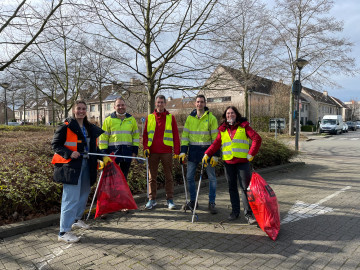
What would you say to someone who wants to do meaningful, substantive work, but doesn't want to be put in a box?

I've asked myself that question too: do I go broad, or do I become an expert in one niche? What's great here is that you don't have to make that call right away. You can explore different directions without it becoming inefficient. That keeps the work varied and stops you from getting stuck in a rut.

You're also encouraged to contribute ideas through our innovation platform, for example, which carves out space within the organization for colleagues to actually develop their proposals into something concrete. That's something I'd love to contribute to down the road.

What surprised you most about Antea Group compared to your expectations?

Going in, I expected things might be more standardized, as is often the case in larger organizations. In practice, I'm glad to find there's a lot of freedom, and it's genuinely easy to connect with colleagues. What also stands out is the openness. I've had several conversations with my managers where I could be completely honest about what I want and how I see my path developing. Together, we look at which direction makes sense for me.

If you had to pick one of Antea Group's values that fits you best, which would it be?

Connection, both within the company and beyond. I strongly believe you need other people to get things done. A lot doesn't happen in meeting rooms; it happens at the coffee machine. Those small moments often make the biggest difference. And they're what keep a human thread running through everything, even within a broader strategic vision. Ultimately, an organization is made up of people and without connection, it just doesn't work.


Want to know more about working at Antea Group?

alt-text

Working at Antea Group

alt-text

Our projects

alt-text

Our domains